
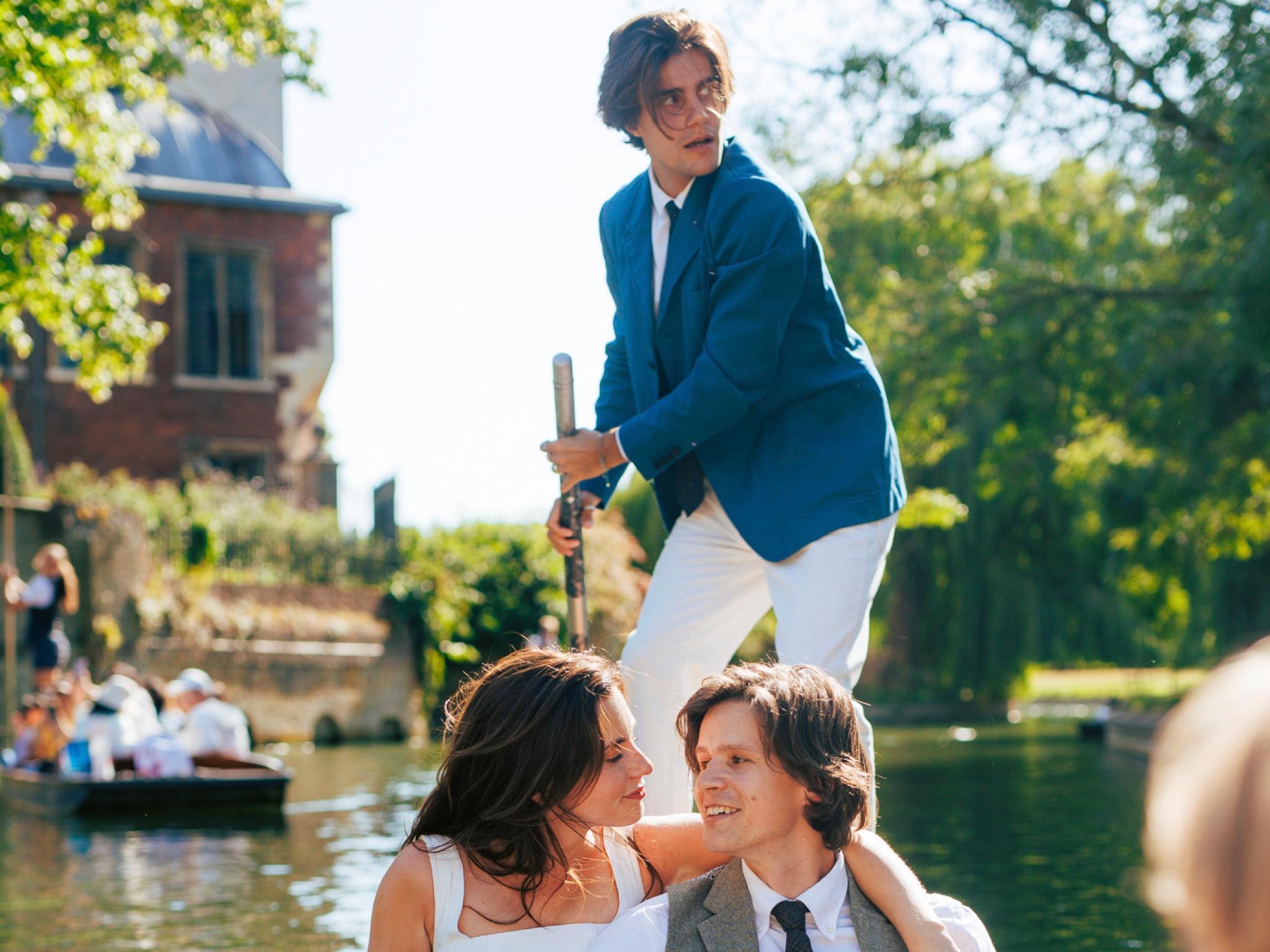
Recognise the shape of a punt
A traditional punt is a long, flat-bottomed boat.4 Its open platform places passengers close to the water while the punter works the pole.
Passengers sit within the boat while the punter normally stands at one end. Local practice and boat design can vary, so follow the operator's instruction about where to stand, sit and board.
Understand the movement without treating it as a lesson
At a high level, the pole reaches the riverbed and the punter pushes through the stroke to send the boat forward.4 Direction comes from the angle of the push and later corrections. Balance, current, wind and other river users complicate the clean explanation.
If you rent a punt, take the included tuition seriously. The safest useful knowledge before arrival is that the movement takes practice and physical effort.
Place the tradition in Cambridge
Visit Cambridge and Pembroke College accounts connect punting with both practical river craft and later recreation.13 By the late nineteenth and early twentieth centuries, pleasure punting had become closely associated with university life and the Cam.
Origin accounts vary, but the broader change is clear: punts moved from practical working craft to part of Cambridge’s social and sightseeing tradition.
See how modern formats differ
A shared chauffeured tour sells a seat and leaves the pole to the guide. A private chauffeured tour gives one party the boat. Self-hire makes learning and steering central to the outing. Combined walking-and-punting products use the river as the second perspective after a city tour.
The boat may be traditional, but the booking format is a modern decision about effort, company, commentary and price basis.
Choose whether to watch, ride or learn
Take a guided tour when history and an uninterrupted view matter most. Choose private when the whole group wants direct conversation with the chauffeur. Choose self-hire when the physical skill is part of the day and everyone accepts that it may be harder than it looks.
For first-trip logistics, continue to the first-timer guide before comparing live tours.
Sources and freshness
Numbered references support the specific planning claims above. Operational details can change, so current booking confirmations and official local guidance take priority.
- Visit Cambridge · checked 2026-10-28
- Cam Conservancy · checked 2026-10-28
- Pembroke College, University of Cambridge · checked 2026-10-28
- University of Cambridge Undergraduate Study · checked 2026-11-01